



Blog

13 Nov
Press Release: New TED Talk Highlights the Power of Child’s Play to Break Cycles of Poverty
Posted by Elizabeth Moreno

FOR IMMEDIATE RELEASE

Global nonprofit founder Marcus Veerman shares new research on the potential of play interventions to dramatically improve life outcomes for children living in poverty.

Melbourne, Australia, Nov. 12, 2015 – In a new TEDx Talk released by TEDxMelbourne this week entitled, “Ending poverty using plastic cups and wooden spoons,” Playground Ideas Founder and CEO Marcus Veerman proposes an unusual intervention to address global poverty: play.

11898887_722332057899673_3237270062141673317_n

Over 90% of the world’s children are now attending school. This is, “a incredible opportunity for children to be lifted out of poverty,” says Veerman. But unfortunately, for millions of children in the developing world, school is failing to equip them with the skills they need to thrive. UNESCO estimates that after four years of schooling, 2/3 of children in Sub Saharan Africa and Southeast Asia are failing the minimum benchmarks – things like reading and writing a simple sentence. Veerman calls this, “a colossal loss of human potential.” He goes on to describe the similarities schools across the world with overwhelming failure rates share: overcrowded classrooms, little access to stimulating resources and toys, and a prevalence of rote, memorization based learning.

Veerman goes on to cite a study from Jamaica illustrating the powerful potential of play to shape life outcomes for children living in poverty. In the mid 1980s a group of community health workers piloted an randomized trial on a group of developmentally stunted toddlers living in poverty. For two years, these toddlers and their mothers received weekly visits where health workers coached the mothers to to play with their children using simple props like plastic cups and wooden spoons.

Twenty years later, Nobel Prize winning economist James Heckman studied the result this psychosocial stimulation had on the children as adults. The followup study found a substantial effect on labor market outcomes, with the average earnings of participants increased by 42 percent compared to their control group peers. “Can you imagine the difference it would make to the GDP of a country if all children had time and space to play?” Veerman asks.

tedx image

The Jamaica Study is supported by similar play based early childhood interventions in the U.S. such as the Abecedarian Study and Perry School Project – all of which demonstrated substantial long term benefits from early play-based programs. The interventions resulted in higher earnings, higher high school graduation rates and bachelors degrees and lower rates of incarceration, teen pregnancy, and need for public assistance.

Veerman is the founder of Playground Ideas, a nonprofit organisation that works to expand access to play globally by equipping communities around the world to build playgrounds using local tools, materials, and skills. Through an open source website with playground building manuals, safety guidelines, and over 150 step-by-step DIY designs, over 900 communities in 72 countries have built play spaces, impacting over 450,000 children.

By equipping schools with the resources and knowledge to build their own playgrounds, the organisation strives to transform education outcomes for low income schools throughout the developing world. Beyond labor market outcomes, Veerman sites the benefits of play for gaining critical skills for the 21st century like self control, problem solving, creative thinking, and social competence.

Veerman’s final charge is simple: “If you want your children to thrive, and if we want the world’s children to thrive, we need to invest in them when they’re young. We must create time and space for children to play.”

About Marcus Veerman: Self-described maker, hacker and designer Marcus Veerman is CEO and Founder of Playgroundideas.org, an organisation that supports communities around the world to build playgrounds from local tools, materials, and skills. With a background in primary education, outdoor leadership, and design-build learning, he founded Playground Ideas after spearheading the construction of 40 bespoke playgrounds along the Thai/Burma border.Marcus responded to a wave of interest in international playground building by creating an open source platform to share best practices.

About Playground Ideas: Playground Ideas is an Australian non-profit organisation that equips anyone, anywhere to build a stimulating space for play using only local materials, tools, and skills.

Watch the TEDx Talk.

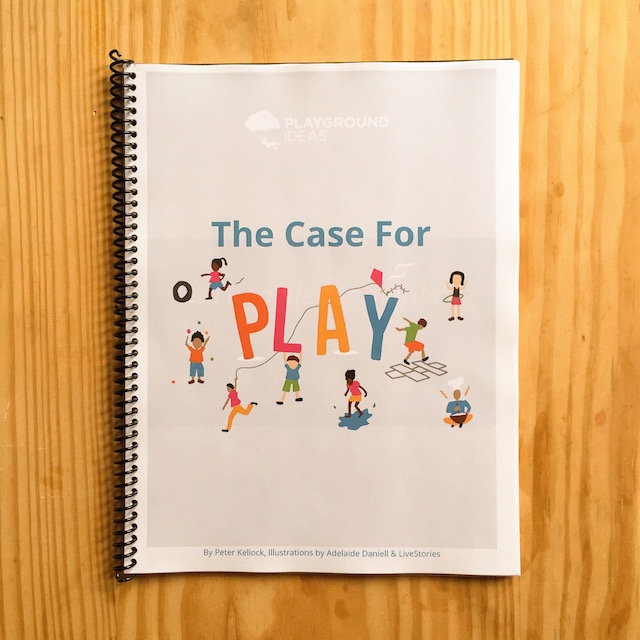
Learn more about the research behind Marcus’ talk in the Case for Play, a report highlighting the most significant research findings on the impact of early play interventions, particularly for children living in poverty.

Explore an infographic on the data in Marcus’ talk.

Media contact:
Elizabeth Moreno
Communications & Program Development Manager
Playground Ideas
elizabeth@playgroundideas.org

Press Release: New TED Talk Highlights the Power of Child’s Play to Break Cycles of Poverty
10 Nov
TEDxMelbourne | Marcus Veerman | Ending poverty using plastic cups and wooden spoons
Posted by Elizabeth Moreno

Marcus Veerman is CEO and Founder of Playground Ideas. Playground Ideas is a nonprofit organisation that supports communities around the world to build open source playgrounds from local tools, materials, and skills. He founded Playground Ideas after spearheading the construction of 40 bespoke playgrounds along the Thai/Burma border.

Learn more about the research behind Marcus’ talk in the Case for Play, a report highlighting the most significant research findings on the impact of early play interventions, particularly for children living in poverty.

Explore our infographic on the data in Marcus’ talk.

Check out more talks, articles, and podcasts on the power of play in our curated collection.

Ready to build your own playground? Start here.

29 Oct
New Release! Inclusive Design Manual
Posted by Elizabeth Moreno

Today we are thrilled to release our latest manual, “Play for All: Designing Spaces of Inclusion.”  It is a guide to creating play spaces accessible for children of all abilities, written by architect and Playlab Fellow Brian Luce. Download “Play for All: Designing Spaces of Inclusion” here.

Over the years, we at Playground Ideas have been inspired by the community leaders in our global network that have built play spaces which welcome children of all abilities. Working in regions of the world where special needs equipment and surfacing is often unavailable, these individuals have thoughtfully and creatively crafted welcoming spaces for a population of children whose design needs are often overlooked.

kilifi

Kenya

We’ve learned from the examples of Piers Dawson, a volunteer in Kenya who built a recycled playground at a special needs unit of a public primary school and Renet Korthals Altes, an architect from The Netherlands who adapted some of Playground Ideas’ designs to build a playground for a school with children with disabilities in Cairo, Egypt. We’ve been blown away by the “Let All Kids Play” group of volunteers in Kyrgyzstan, who are on a mission to build an accessible playgrounds in each of the seven regions of their country.

Many others around the world have written to us, requesting resources for all access design. We knew designing inclusive playgrounds for children of all abilities required more than simply adding in handicap-accessible elements, so we enlisted Brian Luce, a recent architecture graduate from Syracuse University in New York to create an open-source manual to guide local builders through an inclusive design process.

While at Syracuse, Brian had the opportunity to work on designing and building Play Perch, a wheelchair accessible treehouse and outdoor classroom at a local elementary school. The beauty of the project is that to the outside observer, the Play Perch doesn’t look like an “accessible playground.” It just looks like a really cool treehouse. And that, Brian believes, is the goal of all inclusive play environments.

 “I am interested in the way that good design can be subtle in its attempt to include everyone,” Brian explains, “Playgrounds that shout ‘handicapped’ can be off putting for everyone and designing solutions that are inclusive without giving up their spirit is a goal that every playground should shoot for.”

Play Perch, New York

Play Perch, New York

Brian brought this same philosophy to “Play for All: Designing Spaces of Inclusion.” The manual provides examples, prompts, and guidelines to help builders craft truly inclusive playgrounds that facilitate meaningful interactions between children of different abilities and provides opportunities for challenge, healthy risk and mastery for all children.

Brian writes, “As a designer, I believe it is essential to give everyone a place in our thoughts when designing spaces. One of the most important parts of being a child is exploring the world through play, and it is my hope that this manual inspires people to build more inclusive spaces for children of all abilities to explore the world around them.”

brian luce

Brian Luce


Deepen your understanding of inclusive design philosophy and learn strategies for designing playgrounds that welcome and celebrate the unique abilities of all children. Download “Play for All: Designing Spaces of Inclusion” here.

About the Playlab Fellowship: The Play Lab Fellowship with Playground Ideas is a unique opportunity for students and recent graduates to gain experience in the playground field and make a meaningful contribution to an open source movement that is spreading access to play to hundreds of thousands of children across the globe. Dive into international nonprofit work without stepping on a plane and collaborate with creatives from around the world right from your computer screen. We’re looking for talented, innovative, self-starting, think-outside-the-box-ers who are passionate about play and excited to build resources to better serve the Playground Ideas community. See open positions. 


13 Oct
PRESS RELEASE: ROI of Play
Posted by Elizabeth Moreno
PRESS RELEASE: FOR IMMEDIATE RELEASE

October 13, 2015

Melbourne, Australia – Global nonprofit Playground Ideas has equipped more than 950 schools and communities in impoverished places around the world to build stimulating play spaces with only local materials, giving over 450,000 children access to play. On October 12th, Playground Ideas released a pathbreaking report called “The Case for Play.”

The report highlights the most significant research findings on the impact of early play interventions, particularly for children living in poverty. The results are astounding: Access to play from birth through preschool boosts life outcomes substantially – 42% raise in yearly earnings, 44% increase in high school graduations, and 17% increase in bachelor degrees. Perhaps most importantly, play builds the critical skill of self-regulation, which underpins success for a lifetime.
Playground Ideas has seen the impact of play firsthand in places like Kenya, Brazil, and the Thai-Burma border, where the organization first began. And now, based on these findings, Playground Ideas and the play advocacy community is calling on both the public and private sectors who oversee the welfare of children to:
  1. Ensure every child under the age of 12 has substantial daily access to a stimulating, safe space for play;
  2. Emphasize the importance of early play opportunities from 0-3; and
  3. Prioritize play as a basic right for children in crisis.
“With this research in hand there is no excuse,” said Playground Ideas Founder and CEO Marcus Veerman. “Universal primary education is a great start, but with 60% of children failing after four years in places like Sub-Saharan Africa and Southeast Asia, it’s time to recognize that lessons and tests are not the final answer. Children are wired to play, because play is how children are wired to learn. It’s time to make sure every child has the space and freedom to play.”READ THE CASE FOR PLAY

Follow on Facebook, Twitter, and Instagram and join the movement: #caseforplay

Help us spread the word via social media. Here are some sample tweets:

1) New report from @playgroundideas shows early play = 42% raise in earnings. #caseforplay http://goo.gl/mdythn

2) @playgroundideas report just out shows play to be a powerful, cost effective poverty reduction tool. #caseforplay http://goo.gl/mdythn

About Playground Ideas: Playground Ideas is an Australian non-profit organisation that equips anyone, anywhere to build a stimulating space for play using only local materials, tools, and labor.

Media contact:
Elizabeth Moreno
Communications & Program Development Manager
Playground Ideas
elizabeth@playgroundideas.org


Call to Action PI Play Stats PI  Playground_Ideas_logo_small2

PRESS RELEASE: ROI of Play